

October 2025 Newsletter
Posted By: Mark Friday 28th November 2025 Tags: AI, Artificial Intelligence, cyber attacks, cyber crime, Cyber Security, Data Breach, Data Leak, Data Privacy, Data Protection, Newsletter, ransomware, technologyThis month: AWS outage, NCSC annual review, OpenAI enters browser wars, AI in research, plus the latest LaneSystems news.

AWS Outage: When The Cloud Breaks
On 20 October 2025, Amazon Web Services (AWS), the world’s largest cloud computing provider, suffered a major outage that rippled across the globe. For many businesses and individuals, it was a stark reminder of just how much we rely on invisible infrastructure to keep our digital lives running smoothly.
What happened?
The disruption began in the early hours of the morning, UK time, when AWS’s US-EAST-1 region — one of its busiest data hubs — started experiencing technical issues. By mid-morning, users around the world were reporting problems accessing websites, apps, and online services. The culprit? A failure in AWS’s internal Domain Name System (DNS), which helps route internet traffic to the right places. This glitch created a domino effect, knocking out other services that depended on it.
The outage lasted for much of the day, with some services only returning to normal late in the evening. It was one of the most widespread cloud service disruptions in recent years.
Who was affected?
The list of affected companies reads like a who’s who of the internet. Social media platforms like Snapchat and Reddit went offline. Smart home devices such as Ring doorbells stopped working. Even AWS’s own customer support portal was inaccessible for a time.
In the UK, the impact was felt across sectors. Retailers relying on AWS-hosted e-commerce platforms saw checkout systems fail. Some travel companies experienced booking delays. And everyday users found themselves locked out of apps they use daily — from streaming services to banking apps. Lloyds Banking Group was affected, with customers of Lloyds Bank, Halifax, and Bank of Scotland reporting widespread issues accessing their online banking services such as mobile apps, online banking portals, and card payments.
Why does this matter?
AWS is one of the “big three” cloud providers, alongside Microsoft Azure and Google Cloud. These companies host everything from websites and apps to databases and file storage. For many businesses, using cloud services is a no-brainer — they’re scalable, cost-effective, and reliable.
But when something goes wrong, the consequences can be far-reaching. If your business relies entirely on one provider — or even one region within that provider — a single technical fault can bring everything to a halt.
What can businesses do?
While no system is immune to failure, there are steps businesses can take to reduce the risk of being caught out:
- Spread the load: Hosting your services across multiple regions (or even across different cloud providers) can help keep things running if one area goes down.
- Have a backup plan: Regularly test your disaster recovery processes. Know how you’ll respond if your main systems fail.
- Monitor proactively: Use monitoring tools to spot issues early and respond quickly.
- Talk to your IT provider: Make sure your cloud setup is resilient and that you understand where your services are hosted.
The October AWS outage was a wake-up call. It showed how even the most trusted tech giants can stumble — and how those stumbles can affect millions. For businesses, it’s a reminder to ask the right questions about their digital infrastructure and to plan for the unexpected.
If you’re unsure how your systems would cope in a similar situation, now’s the time to review your setup. Our team is always here to help you build a more resilient, future-proof IT environment.
If you’re a business in the North East of England and would like an audit of your company’s IT systems, get in touch today.

LaneSystems News
Charity News
In October, we donated security awareness training, worth £340, for all staff at Stockton Citizens Advice.
Windows 10 End of Support Deadline Passes
As of 14th October 2025, Microsoft has officially ended standard support for Windows 10. Regular updates and technical assistance have ceased. Some security updates are still available through Microsoft’s Extended Security Updates (ESU) programme, but, if your organisation is still running Windows 10, it’s important to understand the limitations and risks. We strongly recommend planning your upgrade to Windows 11 to ensure long-term security and compliance.
For more than a year, we’ve been proactively contacting our clients to help plan a smooth transition to Windows 11. If your business in the North East of England hasn’t yet made the switch—or needs assistance with the upgrade—please don’t hesitate to get in touch. We’re always here to help.
NCSC Annual Review
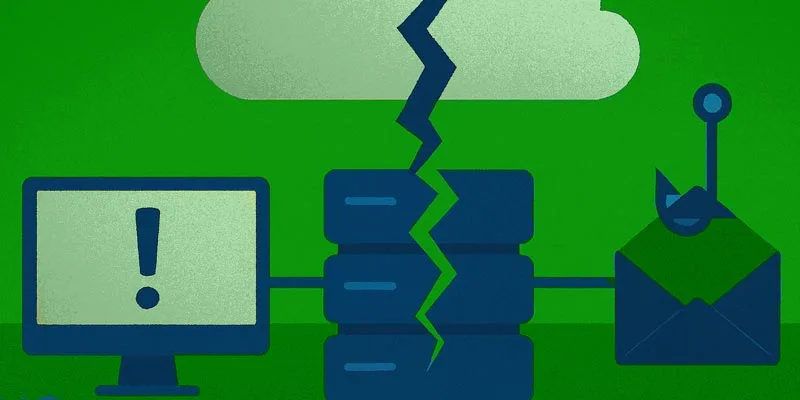
The National Cyber Security Centre (NCSC) has published its 2025 Annual Review, and the message is clear: the UK’s cyber threat landscape is growing more dangerous, more complex, and more disruptive. Between September 2024 and August 2025, the NCSC responded to 429 cyber incidents, nearly half of which were deemed “nationally significant”—a 50% increase on the previous year.
The most disruptive threat remains ransomware, with high-profile attacks affecting major UK brands like Marks & Spencer, Co-op, and Jaguar Land Rover. But it’s not just big names at risk. The review highlights that small and medium-sized businesses are increasingly being targeted, often because they lack the resources or contingency plans to bounce back quickly.
To help organisations understand the nature of these threats, the NCSC categorises cyber incidents into six types:
- Nationally significant – affecting critical infrastructure or large parts of the population
- Highly significant – major disruption to services or supply chain
- Moderately significant – targeted attacks with limited spread
- Low significance – minor incidents with minimal impact
- Wider interest – incidents that attract media or public attention
- Routine – common, low-level threats like phishing or malware
The review offers practical advice, with one of its most important recommendations being to put contingency plans in writing. Too many organisations rely on informal or outdated procedures. The NCSC urges businesses to test their recovery plans, ensure they can operate without key systems, and know who to contact in a crisis.
Another key takeaway: cyber security is no longer just an IT issue. It’s a business continuity issue, a reputational risk, and a financial liability. The NCSC is calling on leadership teams to own the risk, ask the right questions, and invest in resilience.
In short, the cyber threat landscape is evolving—and so must we. Whether you’re a sole trader or a large organisation, now is the time to review your defences, rehearse your response, and make cyber resilience part of your business DNA.
If you’re a business in the North East of England and would like an audit of your company’s disaster recovery procedures, get in touch today.

OpenAI Enters The Browser Wars
OpenAI has officially stepped into the browser arena with the launch of ChatGPT Atlas, a new AI-powered web browser designed to challenge the dominance of Google Chrome and Microsoft Edge. Announced on October 21 and currently available for macOS, Atlas wants to be more than just a new way to surf the web—it aims to be a bold reimagining of how we interact with information online.
Rather than relying on the traditional address bar and search engine model, Atlas is “built around ChatGPT,” according to OpenAI CEO Sam Altman. The browser integrates the company’s flagship chatbot directly into the browsing experience, allowing users to highlight text, ask questions, and receive real-time summaries or insights without ever leaving the page.
This move comes at a time when the way people search for information is rapidly evolving. A growing number of users are turning to large language models (LLMs) like ChatGPT for answers, recommendations, and even task automation. According to research firm Datos, LLMs accounted for nearly 6% of desktop search traffic as of July 2025—more than double the figure from the previous year.
OpenAI is betting that users are ready for a more conversational, context-aware experience. With AI rapidly reshaping how people find and use information, Atlas could mark a turning point in how browsers compete—not just on speed or design, but on intelligence.

AI in Research: Widespread Use, Tempered Expectations
A new global study by Wiley reveals that while AI adoption among researchers has surged to 84% in 2025 (up from 57% in 2024), confidence in its capabilities has notably cooled. The report, based on responses from over 2,400 researchers, paints a picture of growing pragmatism as hands-on experience tempers early enthusiasm.
Researchers overwhelmingly report that AI boosts productivity: 85% say it improves efficiency, and around 73% believe it enhances both the quantity and quality of their work. Yet, belief in AI’s superiority over human performance has dropped sharply—from 53% of use cases in 2024 to under 33% in 2025. This recalibration suggests a shift from hype to a more grounded, evidence-based view of AI’s role in research.
Concerns have grown in tandem with usage. Worries about hallucinations and inaccuracies rose from 51% to 64%, while privacy and security anxieties climbed to 58%. Ethical and transparency issues also remain prominent. Despite these concerns, researchers continue to rely heavily on general-purpose tools like ChatGPT and Copilot, with only 25% using AI tools specifically designed for research. Limited awareness appears to be a key barrier to uptake of specialised solutions.
Despite the growing scepticism, more than half would trust a capable AI agent to act autonomously on their behalf—once its performance improves. The research community is embracing AI, but with eyes wide open. The technology is here to stay, but its role is being redefined by experience, not expectation.
Need Cyber Security?
If you’re a business in the North East of England and looking for professional and reliable cyber security services, IT consultation, and general IT services to keep your company cyber secure, get in touch. Cybersecurity is a continuous process, and staying proactive is key to safeguarding digital assets.


