

June 2026 Newsletter
Posted By: Mark Friday 31st July 2026 Tags: AI, Apple, Artificial Intelligence, cyber attacks, cyber crime, Cyber Security, Data Breach, Data Leak, Data Protection, ISO Certification, NCSC, Newsletter, phishing, ransomware, Social Media, technology, vishingThis month: social media ban, June review of cyber attack news, the UK’s first AI adoption summit, June tech news review – plus the latest LaneSystems news.

UK Proposes Social Media Ban for U16s
Where Things Stand
The UK government has announced plans to ban children under 16 from accessing major social media platforms, marking one of the most significant shifts in online safety policy in recent years. The proposal, unveiled on 15 June 2026, follows a large national consultation on children’s relationship with mobile phones and social media. The ban is expected to come into force by early 2027.
What the Social Media Ban Involves
The government intends to prevent under‑16s from holding accounts on major platforms including Instagram, TikTok, YouTube, Snapchat, Facebook, and X (formerly Twitter). Messaging apps such as WhatsApp and Signal are expected to remain accessible.
The duty to enforce the ban will fall on the platforms themselves, not on parents or children. Companies will be required to implement robust age‑assurance systems to block under‑16s, with significant fines for non‑compliance.
The move is part of a broader effort to address online harms such as cyberbullying, exposure to inappropriate content, addictive design features, and contact from unknown adults. These concerns have persisted despite the rollout of the Online Safety Act 2023, prompting calls for stronger measures.
Support for the Social Media Ban
Prime Minister Keir Starmer has strongly backed the proposal, arguing that social media is harming children’s wellbeing. He stated:
“Social media is making children unhappy. It’s making it easier for bullies to harass and abuse them, and it could even be harming their mental health.”
Starmer also emphasised the addictive nature of platform design:
These platforms are designed to be “addictive,” and the UK must “protect our children” while still harnessing technology for a “stronger, fairer Britain.”
Public support is high. The government consultation found that nine out of ten parents backed a ban for under‑16s, giving ministers a strong mandate to act.
Criticism and Concerns over the Social Media Ban
Tech companies and digital rights groups have raised concerns about the feasibility and consequences of a blanket ban.
A YouTube spokesperson warned:
“Blanket bans push kids out of curated, supervised, beneficial experiences and towards anonymous, less safe services.”
Meta argued that restricting access could isolate young people:
“Bans risk isolating teens from online communities and information, and driving them to unregulated alternatives that lack built‑in protections and parental controls.”
Privacy advocates also highlight the risks of large‑scale age‑verification systems, which could create “mass surveillance infrastructure” affecting millions of adults.
Others warn that banning social media may leave young people unprepared for the digital world they will enter at 16, especially as the government plans to lower the voting age.
How the UK Social Media Ban Compares Internationally
The UK’s proposal follows similar action in Australia, which introduced a ban for under‑16s in December 2025. The Australian government said the measure would protect young people from harmful design features and damaging content.
Early enforcement in Australia saw 4.7 million accounts removed within the first month, demonstrating that large‑scale compliance is possible – though imperfect, as many under‑16s still retained accounts.
The UK plans to go further than Australia by potentially including gaming platforms and livestreaming services, reflecting concerns that harmful interactions extend beyond traditional social media.
What Happens Next
The proposal is not yet law. Legislation will need to pass through Parliament, and detailed rules will be shaped during that process. Full enforcement is unlikely before 2027, but platforms are already preparing for stricter age‑assurance requirements.
As the debate continues, one thing is clear: the UK is moving towards one of the most ambitious online child‑protection regimes in the world, with strong public backing but significant technical and ethical challenges ahead.

LaneSystems News
Charity News
As part of our ongoing focus on cyber awareness for our clients and the wider community, this month’s charitable donation is for another of our hospice partners, with £300 of phishing awareness training to help Teesside Hospice strengthen their defences against this growing cyber threat.
Phishing & Vishing Training: Strengthening Your First Line of Defence
Phishing and vishing attacks remain one of the most effective ways criminals breach organisations — not by breaking systems, but by manipulating people. Even well-trained, experienced staff can be caught off guard by messages or calls that appear completely legitimate. Attackers use urgency, authority, and familiarity to create pressure, and as highlighted in last month’s article, a single successful attempt can lead to credential theft, financial loss, or unauthorised access deep inside a business’s systems .
That’s why structured phishing and vishing training is no longer a “nice to have” — it’s a critical layer of cyber protection. Real-world simulations and guided awareness sessions help employees recognise the subtle cues that attackers rely on, giving them the confidence to pause, question, and report suspicious activity before damage occurs. Organisations that take this proactive approach significantly reduce the likelihood of successful attacks and strengthen their overall resilience .
LaneSystems provides tailored phishing and vishing training designed specifically for busy teams who need practical, actionable skills. Our sessions help staff understand how modern social-engineering attacks work, what red flags to look for, and how to respond safely under pressure. If your business wants to reduce risk, protect sensitive information, and build a more cyber-aware workforce, now is the ideal time to invest in this training.
Get in touch today to for more information about our phishing and vishing awareness training.
ISO Certifications
When many businesses hear the word ISO, they immediately think of policies, audits and certificates on the wall. And that is often where the misunderstanding begins.
Most SMEs are already carrying out much of what ISO requires. They are onboarding staff, managing suppliers, resolving issues and continuously improving services. The challenge is often not doing the work itself. It is connecting the work together in a structured way.
At LaneSystems, we believe management systems should become part of the normal rhythm of the business rather than a collection of documents sitting in folders and only being opened during audit season.
Because the strongest ISO implementations do not simply help businesses achieve certification. They help businesses run better.
If you’re a business in the north-east of England, contact us today to find out more about our help with gaining ISO certification and how it can help your business work more effectively.
June Cyber Overview
The Rising Tide of Phishing Attacks Against UK Businesses
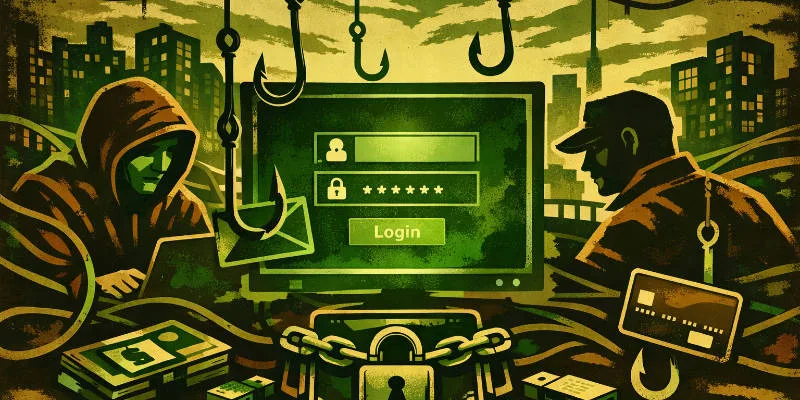
June provided another stark reminder that phishing remains the most common – and most effective – way criminals break into organisations. While cyber‑attacks often make headlines only when a major breach occurs, the real story this month has been the sheer scale, sophistication, and persistence of phishing campaigns targeting UK businesses of all sizes.
For companies across our region, this matters. Phishing is no longer just about spotting a dodgy email. Criminals now use AI, deepfakes, and highly convincing impersonation techniques to trick staff into handing over passwords, approving payments, or granting access to systems. The attacks are faster, more personalised, and harder to detect than ever before.
Below is a digestible overview of the most notable phishing‑related incidents and trends from June – and why they reinforce the importance of regular staff training and awareness.
AI‑Powered Phishing Goes Global – With Direct Impact on UK Businesses
One of the biggest stories this month came from Google, which filed legal action against a large phishing‑as‑a‑service operation based in China. The group used artificial intelligence to generate millions of fraudulent SMS messages impersonating trusted brands such as HMRC, Royal Mail, Microsoft, and major banks.
These messages weren’t riddled with spelling mistakes or odd phrasing. They were polished, accurate, and almost indistinguishable from genuine communications. The operation sold ready‑made phishing kits to criminals worldwide, meaning even inexperienced attackers could launch convincing campaigns at scale.
For UK businesses, this is a growing concern. Staff often receive these messages on personal devices, but the consequences spill over into the workplace – especially when attackers target Microsoft 365 logins, payroll portals, or supplier accounts.
Retail Sector Under Pressure After Social‑Engineering Attacks
The UK’s National Cyber Security Centre (NCSC) continued to warn organisations after a series of high‑impact incidents affecting well‑known retailers earlier this year. June saw renewed attention on attacks involving impersonation of employees to trick IT support teams into resetting passwords or disabling multi‑factor authentication.
Large brands including M&S, Co‑op, and Harrods were affected, with attackers using stolen or socially engineered credentials to access internal systems. Although these incidents didn’t all occur in June, the NCSC’s ongoing guidance highlights how phishing remains the entry point for many of these breaches.
The lesson is clear: even organisations with strong technical controls can be undermined if attackers successfully manipulate staff.
Deepfake Voice and Video Scams Are Now a Real‑World Threat
June also saw renewed reporting on cases where criminals used AI‑generated voice and video deepfakes to impersonate senior executives.
This type of attack is no longer theoretical. Criminals can now clone voices from short audio clips and generate realistic video overlays. When combined with urgent messaging – “I need this payment processed immediately” – the results can be devastating.
Finance teams, HR departments, and anyone responsible for authorising payments or handling sensitive data should be particularly cautious.
Credential‑Harvesting Campaigns Surge Across the UK
Ongoing phishing campaigns are continuing to impersonate HMRC, NHS Digital, high‑street banks, telecoms providers, and cloud platforms. Many of these attacks used QR codes, fake Microsoft 365 login pages, or multi‑channel reinforcement (email followed by SMS or phone call) to appear more credible.
These campaigns target both individuals and businesses, but the impact on organisations is significant. A single compromised login can lead to data breaches, ransomware incidents, or unauthorised access to shared systems.
Why This Matters – And What Businesses Should Do Next
Phishing remains the number‑one cause of cyber breaches in the UK. The attacks are evolving rapidly, and criminals are using AI to remove the traditional warning signs staff once relied on.
This is why regular, practical phishing‑awareness training is essential. Technology alone cannot stop every attack; informed and confident staff are your strongest defence.
If your organisation would benefit from updated training, simulated phishing exercises, or a review of your current cyber‑awareness approach, our team is here to help.

UK Holds Its First AI Adoption Summit
The UK held its first AI Adoption Summit on June 8th 2026, marking a major shift in how the government wants businesses and workers to engage with artificial intelligence. Rather than focusing on futuristic research or long‑term risks, the summit concentrated on something far more practical: helping organisations across the country start using AI in real, everyday ways.
The government’s message was clear. AI is already transforming industries, and the UK wants to become the fastest adopter of AI in the G7. To support this, ministers announced a £200 million investment package aimed at helping companies adopt AI responsibly and giving workers the skills they need to use it confidently.
AI Growth Zones
A large part of this funding will expand programmes such as Bridge AI, which connects UK businesses with trusted AI developers, and new AI Growth Zones, which will support local companies with training and adoption. The government also launched the AI Economics Institute, led by Nobel Prize‑winning economist Simon Johnson, to study how AI is affecting jobs, productivity, and growth.
More than 40 major organisations, including BT, Rolls‑Royce, Microsoft, HSBC and Accenture, signed up to support the initiative. Their role is to share insights, help shape policy, and encourage responsible use of AI across their sectors.
Practical steps for using AI safely and effectively
The summit also introduced AI Adoption Plans for key industries such as manufacturing, finance, energy, and the creative sector. These plans were written by independent experts and set out practical steps for how businesses can start using AI safely and effectively. The government published initial responses to each plan, signalling that further support and guidance will follow.
Speaking at the event, Chancellor Rachel Reeves said the UK must “go further and faster” to give workers and businesses the tools they need to benefit from AI. Technology Secretary Liz Kendall added that AI will only succeed if “everyone gets a stake in it”.
The summit marks the beginning of a nationwide effort to make AI accessible, useful, and beneficial for businesses of all sizes — not just tech giants. For many organisations, it represents a clear signal that now is the time to start exploring how AI can improve productivity, streamline tasks, and open new opportunities.
A Complementary Challenge: The Growing Skills Gap
The summit arrives at a time when many businesses are struggling to keep pace with rapid technological change. A recent Survation poll for BusinessLDN found that half of London firms believe their staff no longer have all the skills they need, down from 63% the previous year. The number reporting significant skills gaps has risen sharply, and three‑quarters of companies now use AI, with most saying it has changed the skills required in their workforce. Employers expect demand for advanced digital skills to grow quickly, and a record 81% plan to increase investment in training.
A National Moment of Change
Together, the summit and the poll paint a clear picture: UK businesses are eager to adopt AI, but many need support to ensure their workforce is ready. The government’s new strategy aims to close that gap, making AI accessible, useful and beneficial for organisations of all sizes.

June Tech News Review
Here are some notable tech-related news stories from the month.
SpaceX Launches the Largest IPO in History
On 12th June, SpaceX debuted on Nasdaq, raising $75 billion initially and $85.7 billion after overallotment — the largest IPO ever recorded. Shares surged 19% on day one, pushing its valuation, at one point, above $2.1 trillion.
The IPO filings revealed staggering AI‑compute spending across the industry, including Anthropic paying $1.25 billion per month for GPU capacity and Google paying $920 million per month, signalling a new era where space, AI, and cloud infrastructure are tightly intertwined.
OpenAI Unveils Its First Custom AI Chip
On 24 June, OpenAI and Broadcom announced Jalapeño, OpenAI’s first custom inference chip, designed in just nine months using AI‑assisted chip design. The chip is purpose‑built for high‑efficiency inference workloads and marks OpenAI’s move from relying solely on NVIDIA hardware to developing its own silicon.
This shift mirrors a broader industry trend: major AI labs are racing to build proprietary hardware to reduce costs and secure supply.
Apple Introduces a Fully AI‑Powered Siri
At WWDC 2026, Apple unveiled a redesigned Siri capable of understanding personal context, analysing on‑screen content, and performing complex multi‑step tasks. Apple emphasised a privacy‑first approach, positioning Siri as a productivity assistant rather than just a voice interface.
This marks Apple’s most significant AI upgrade in years and signals deeper integration of generative AI across its ecosystem.
IBM Reveals Breakthrough Sub‑1nm Chip Technology
IBM announced a 0.7‑nanometre chip architecture capable of packing nearly 100 billion transistors onto a fingernail‑sized processor. The breakthrough promises major gains in performance and energy efficiency for AI‑intensive workloads.
This development could reshape the semiconductor landscape and accelerate next‑generation AI systems.
Need Cyber Security?
If you’re a business in the North East of England and looking for professional and reliable cyber security services, IT consultation, and general IT services to keep your company cyber secure, get in touch. Cybersecurity is a continuous process, and staying proactive is key to safeguarding digital assets.


